Healthy Life
A welcome message to 2026 from Professor James Goodwin
January 1, 2026
SHARE




In October last year, I was invited to a special public event on Brain Health. I was delighted to attend. It was held in the Stiles-Nicholson Brain Institute in Jupiter, Florida. For those who don’t know Jupiter, it is a beautifully scenic city on the east coast, about 30 minutes north of Palm Beach.
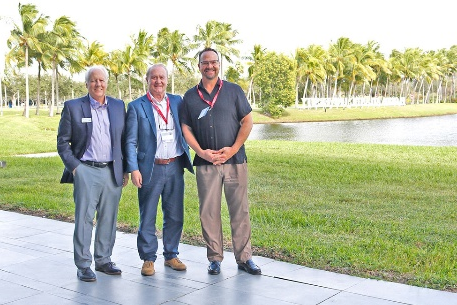 Dr Randy Blakely, the founder and director of the institute, had flown in some of the most distinguished brain researchers from across the US, to present their latest findings to a fascinated audience. I was thrilled to be amongst them.
Dr Blakely (left), myself (centre) and Patrick McNamara (Brain Health Network partner, right)
As we begin 2026, I believe that some of this new science will not only see the light of day but will begin to transform our lives and give us hope for the future. Of all the speakers, there were three whose research findings struck me as particularly hopeful.
The first of these was Dr Henrietta van Praag.
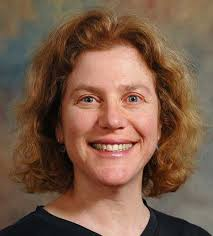 Educated in Israel at the prestigious Tel Aviv University, Henrietta’s specialty is the beneficial effect of exercise on brain function and behaviour. Now, the research world is replete of spectacular new findings on how physical exercise contributes to our brain health. We know that regular mid-to-high intensity exercise improves our general thinking skills (our ‘cognition’) and memory, alters blood flow to the brain and improves ‘neural plasticity’ (the capacity of the brain to adapt to challenges and threats, such as prolonged stress).
But Henrietta went beyond these questions. She simply asked, ‘can exercise reduce the risk or treat Alzheimer’s disease?’ – a very different question. She concentrated on a protein that is released into the blood from the muscles during exercise. It is called, ‘Cathepsin B’. In animal studies, this reduces neuroinflammation and improves cognition in aged mice. Other studies have found it is neuroprotective in the brain. However, it is yet unknown whether Cathepsin B treatment can prevent cognitive decline in neurodegenerative disease.
She devised an experiment in which Alzheimer’s disease mice were treated with Cathepsin B. What she found was stunning and intriguing in equal measure. Cathepsin B prevented the appearance of motor (‘movement’), cognitive, and nerve cell impairment and restored normal levels of brain function. For example, the treatment protected Alzheimer’s disease mice against memory decline. These findings I regard as amazing. Where the world of big pharma spends billions on amyloid and tau drug chemistry, a simple treatment with a perfectly natural substance has shown brilliant promise.
Now to my second impressive speaker – Dr Brittany Needham of the Indiana School of Medicine.
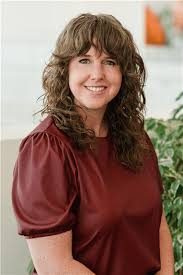 A rising star in microbiology and the brain, Brittany kicked off her career with a PhD looking at how bacteria can subvert our abilities to detect them, and moved on to how we can manipulate their by-products into opportunities for therapies.
This now gets a little complicated but bear with me, it’s worth the effort! 4EP plays an essential part in insulating our brain’s nerve fibres, and when this process breaks down, behaviour changes.
Like Henrietta, Brittany worked on the effects of a molecule on the brain, but this time not derived from exercising muscles, but from bacteria in the gut. It is called 4EP for short. 4EP is a small but powerful molecule which punches way above its weight.
Brittany’s team noted that mice which had gut bacteria secreting 4EP were more anxious and more irritable.
This and other evidence, leaves us to believe that by controlling the microbe population in the gut or their chemical pathways, we can open up therapies for brain-centred conditions, like autism, depression, anxiety and even Parkinson’s disease. This is not fantasy: there are currently 40 research programmes searching for ‘psychobiotics’: new molecules from our gut bacteria that influence behaviour and health.
Last but not least and to my mind the star of the show, Corinne Lasmézas.
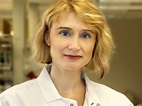 I spoke with Corinne at length. She is a French researcher and a PhD graduate of the world famous Sorbonne. Not only this, but she then moved to Toulouse where, not satisfied with her PhD, she became a Doctor of Veterinary Medicine and a graduate in Aeronautics and Space Medicine.
You may have heard of ‘mad cow disease’, otherwise known as ‘BSE’. Well, it was Corinne who first discovered it could be spread from animals (cows!) to humans well before it was discovered how (via small toxic proteins called ‘prions’).
Corinne had a hunch that the misfolded proteins in Alzheimer’s disease are spread from brain cell to brain cell, just as in BSE. Most research to cure Alzheimer’s disease focuses on halting the misfolding of the proteins, Tau and Amyloid B, but Corinne’s team had a different idea: to focus on preventing the damage to the brain cell by the misfolded proteins. The jigsaw fell into place: her team found that if you replenish an energy molecule called NAD, it completely protects them against the injury caused by misfolded prion proteins. Corinne, however, believes that taking an NAD supplement is not the answer, even though NAD in the brain halves between the ages of 40 and 60. Rather, she is working on a molecule which stops the overuse of NAD in the first place. It is now in clinical trials.
2026 – a year of optimism
In the new year ahead of us, we should dwell on the many new brilliant scientific ideas, like the three I have outlined here which are going to revolutionise the treatment and care of neurodegenerative diseases, like Alzheimer’s disease and Parkinson’s. Though there has never been a cure for any of the 600 neurological conditions, I am optimistic that we are entering a new chapter in our fight for life-long brain health.
I wish you all a very happy new year and a healthy 2026.
More to Explore

Healthy Life
Click here to learn more about the Healthy Life pillar and why it's important for brain health
Explore pillar